Blog / New GMC SUV

Blog

All New GMC SUV New Inventory Seminole Chevrolet Dealer Social Car Tips 2025 Chevy Lineup Local Chevy SUVs Chevy Trucks Service Seminole Buick Dealer Pre-Owned Inventory Seminole Chevrolet Buick GMC Service Chevrolet Safety Features Used Cars 2025 Chevrolet Trax 2025 GMC Lineup 2026 Chevrolet Silverado 1500 2026 Chevy Traverse Community Events Finance GMC Lineup Silverado Towing 2025 Chevrolet Equinox 2025 Chevy Tahoe 2026 Chevrolet Colorado Chevy Colorado Chevy EVs Chevy Safety Features Chevy Summer Service Chevy Tahoe GM Certified Pre-owned GMC Trucks Seminole Used Cars Silverado Max Trailering Silverado Trailering Trade in Values 2024 Chevrolet Silverado 2025 Chevrolet Malibu 2025 Chevrolet Silverado 1500 2025 Chevrolet Suburban 2025 Chevy Blazer 2025 Chevy Blazer EV 2025 Chevy Colorado 2025 Chevy Silverado EV 2025 Equinox 2025 GMC Acadia 2025 GMC Canyon 2025 GMC Sierra 2026 Chevrolet Blazer 2026 Chevrolet Trailblazer Chevrolet Oil Change Chevrolet Summer Service Chevy Sedans Chevy Suburban GMC Pro Safety GMC Pro Safety Plus GMC Safety Features GMC Sierra EV GMC Terrain News Seminole Buick Service Seminole Chevrolet GMC Sierra Towing Sierra Trailering Used Car Values
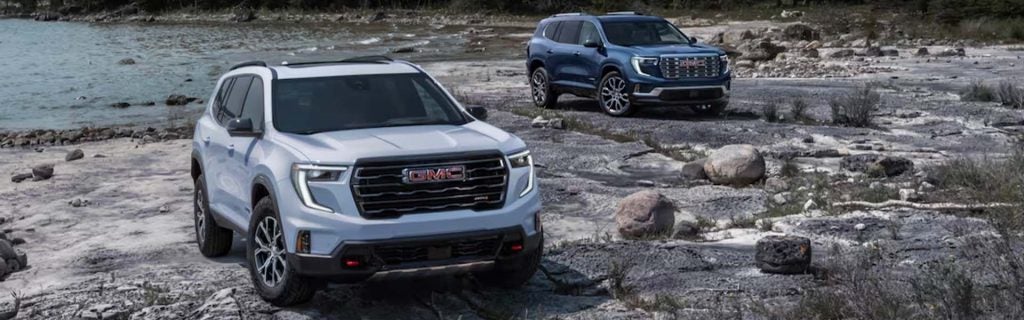
Two 2025 GMC Acadia SUVs parked on rugged, rocky terrain near the shoreline outside Seminole, OK—a white Acadia in the foreground and a blue one positioned behind it under a clear sky.

2025 GMC Acadia: Full Review of Features, Trims & Tech

The 2025 GMC Acadia emerges with a commanding presence, boasting a longer and taller frame that enhances both interior space and cargo capacity. This redesign introduces a 2.5-liter turbocharged engine delivering 328 horsepower and 326 lb-ft of torque, paired with an eight-speed automatic transmission. Standard across all trims is a 5,000-pound towing capacity, complemented by a Class III hitch and hitch view camera system. ​ more Trim Levels in Seminole Elevation The Elevation trim offers a robust set of features, including a 15.4-inch touchscreen, wireless smartphone integration, tri-zone automatic climate control, and synthetic leather upholstery. ​ AT4 The AT4 is tailored for off-road enthusiasts, featuring all-wheel drive, off-road-tuned suspension, all-terrain tires, and an increased ride height. ​ Denali The Denali trim epitomizes luxury, with features like ventilated front seats, premium materials, and advanced driver assistance technologies. Technology and Connectivity Inside, the Acadia is equipped with a standard 15.4-inch infotainment display and an 11-inch digital instrument cluster. The system includes built-in Google apps, Wi-Fi hotspot capability, and multiple camera views to enhance driver awareness. Safety and Driver Assistance Safety is paramount in the 2025 Acadia, which comes standard with the Pro Safety Plus package, offering features like automatic emergency braking, lane keep assist, and forward collision alert. Optional Super Cruise hands-free driver assistance technology is available, providing a semi-autonomous driving experience on compatible roads. ​ Experience the Acadia in Seminole OK Seminole Chevrolet GMC invites you to explore the 2025 GMC Acadia, a vehicle that seamlessly blends performance, technology, and comfort. Visit our dealership in Seminole, OK, to test drive the Acadia and discover how it can elevate your driving experience.

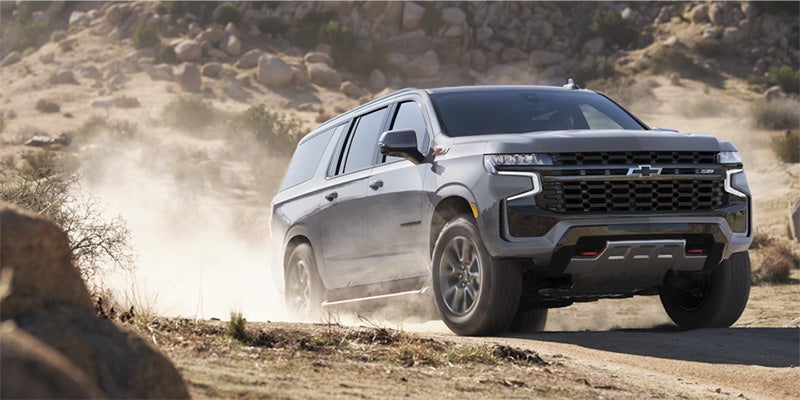
Chevy Suburban

The Difference Between FWD, AWD, RWD, and 4x4 in Your New Chevy

Friday, 16 August, 2024 Understanding the Difference Between FWD, AWD, RWD, and 4x4 in Your New Chevy When shopping for a new Chevy, understanding the differences between various drivetrain options can help you choose the perfect vehicle for your needs. Whether you’re considering a family SUV, a powerful truck, or a sporty sedan, knowing whether to go with Front-Wheel Drive (FWD), All-Wheel Drive (AWD), Rear-Wheel Drive (RWD), or 4x4 can make all the difference in your driving experience. Front-Wheel Drive (FWD) Front-Wheel Drive is one of the most common drivetrain configurations, particularly in sedans, crossovers, and some SUVs. In a FWD vehicle, the engine's power is directed to the front wheels. This setup offers several advantages: Efficiency: FWD vehicles tend to be more fuel-efficient, as they are typically lighter and have fewer mechanical components than other drivetrains. Traction: FWD provides better traction when driving on wet or slippery roads because the weight of the engine sits over the front wheels, improving grip. Cost-Effective: Vehicles with FWD are generally less expensive to manufacture, which often translates to a lower purchase price. However, FWD may not perform as well in off-road conditions or under heavy loads, making it more suitable for daily commuting and light-duty use. All-Wheel Drive (AWD) All-Wheel Drive is a versatile option that provides power to all four wheels, either full-time or on-demand. This system is popular in a wide range of vehicles, from compact SUVs to performance cars. Key benefits include: Enhanced Traction: AWD improves traction on various surfaces, including wet, icy, or unpaved roads, making it a great choice for drivers who encounter diverse driving conditions. Balanced Handling: AWD offers balanced handling and stability, which is especially beneficial in adverse weather conditions or when navigating winding roads. Convenience: Modern AWD systems automatically adjust the distribution of power between the front and rear wheels, so drivers don’t need to engage or disengage the system manually. While AWD improves safety and handling, it usually comes at a higher cost and may slightly reduce fuel efficiency compared to FWD. Rear-Wheel Drive (RWD) Rear-Wheel Drive is traditionally found in sports cars, trucks, and larger SUVs. In a RWD vehicle, the engine sends power to the rear wheels, providing a distinct driving experience: Performance: RWD is favored for its superior handling and acceleration, especially in performance-oriented vehicles. It offers a more dynamic driving experience, with better balance and weight distribution. Towing and Hauling: RWD is ideal for vehicles that need to tow or carry heavy loads, as it provides better traction under heavy loads compared to FWD. Durability: RWD systems are generally more robust, making them well-suited for work trucks and vehicles that endure rough driving conditions. However, RWD may not perform as well in slippery or icy conditions, making it less ideal for regions with harsh winters. 4x4 (Four-Wheel Drive) Four-Wheel Drive, commonly referred to as 4x4, is specifically designed for off-road driving and heavy-duty use. Unlike AWD, which is generally automatic, 4x4 systems often require the driver to engage the system manually: Off-Road Capability: 4x4 systems are engineered for rugged terrain, offering superior traction in mud, snow, sand, and rocky landscapes. Heavy-Duty Performance: If you need to tow a heavy trailer, haul equipment, or venture into off-road environments, 4x4 is the best option. Control: Many 4x4 vehicles allow drivers to choose between different modes, such as 2WD, 4WD High, and 4WD Low, giving you more control based on the driving conditions. The trade-off for these benefits is that 4x4 vehicles can be heavier, less fuel-efficient, and more expensive than their AWD or FWD counterparts. ​Which Drivetrain is Right for You? Choosing between FWD, AWD, RWD, and 4x4 depends on your driving needs, environment, and preferences. For daily commuting and cost-effective ownership, FWD may be your best bet. If you often face varying road conditions, AWD provides a balanced solution. RWD is the go-to for performance enthusiasts and those needing to tow or haul. For the ultimate off-road and heavy-duty capability, 4x4 is the clear winner. At our Chevy dealership, we offer a wide range of vehicles with each of these drivetrains. Visit us today to explore our inventory and find the perfect Chevy to match your lifestyle!


Understanding the Difference Between FWD, AWD, RWD, and 4x4 in Your New Chevy

When shopping for a new Chevy, understanding the differences between various drivetrain options can help you choose the perfect vehicle for your needs. Whether you’re considering a family SUV, a powerful truck, or a sporty sedan, knowing whether to go with Front-Wheel Drive (FWD), All-Wheel Drive (AWD), Rear-Wheel Drive (RWD), or 4x4 can make all the difference in your driving experience. Front-Wheel Drive (FWD) Front-Wheel Drive is one of the most common drivetrain configurations, particularly in sedans, crossovers, and some SUVs. In a FWD vehicle, the engine's power is directed to the front wheels. This setup offers several advantages: Efficiency: FWD vehicles tend to be more fuel-efficient, as they are typically lighter and have fewer mechanical components than other drivetrains. Traction: FWD provides better traction when driving on wet or slippery roads because the weight of the engine sits over the front wheels, improving grip. Cost-Effective: Vehicles with FWD are generally less expensive to manufacture, which often translates to a lower purchase price. However, FWD may not perform as well in off-road conditions or under heavy loads, making it more suitable for daily commuting and light-duty use. All-Wheel Drive (AWD) All-Wheel Drive is a versatile option that provides power to all four wheels, either full-time or on-demand. This system is popular in a wide range of vehicles, from compact SUVs to performance cars. Key benefits include: Enhanced Traction: AWD improves traction on various surfaces, including wet, icy, or unpaved roads, making it a great choice for drivers who encounter diverse driving conditions. Balanced Handling: AWD offers balanced handling and stability, which is especially beneficial in adverse weather conditions or when navigating winding roads. Convenience: Modern AWD systems automatically adjust the distribution of power between the front and rear wheels, so drivers don’t need to engage or disengage the system manually. While AWD improves safety and handling, it usually comes at a higher cost and may slightly reduce fuel efficiency compared to FWD. Rear-Wheel Drive (RWD) Rear-Wheel Drive is traditionally found in sports cars, trucks, and larger SUVs. In a RWD vehicle, the engine sends power to the rear wheels, providing a distinct driving experience: Performance: RWD is favored for its superior handling and acceleration, especially in performance-oriented vehicles. It offers a more dynamic driving experience, with better balance and weight distribution. Towing and Hauling: RWD is ideal for vehicles that need to tow or carry heavy loads, as it provides better traction under heavy loads compared to FWD. Durability: RWD systems are generally more robust, making them well-suited for work trucks and vehicles that endure rough driving conditions. However, RWD may not perform as well in slippery or icy conditions, making it less ideal for regions with harsh winters. 4x4 (Four-Wheel Drive) Four-Wheel Drive, commonly referred to as 4x4, is specifically designed for off-road driving and heavy-duty use. Unlike AWD, which is generally automatic, 4x4 systems often require the driver to engage the system manually: Off-Road Capability: 4x4 systems are engineered for rugged terrain, offering superior traction in mud, snow, sand, and rocky landscapes. Heavy-Duty Performance: If you need to tow a heavy trailer, haul equipment, or venture into off-road environments, 4x4 is the best option. Control: Many 4x4 vehicles allow drivers to choose between different modes, such as 2WD, 4WD High, and 4WD Low, giving you more control based on the driving conditions. The trade-off for these benefits is that 4x4 vehicles can be heavier, less fuel-efficient, and more expensive than their AWD or FWD counterparts. ​Which Drivetrain is Right for You? Choosing between FWD, AWD, RWD, and 4x4 depends on your driving needs, environment, and preferences. For daily commuting and cost-effective ownership, FWD may be your best bet. If you often face varying road conditions, AWD provides a balanced solution. RWD is the go-to for performance enthusiasts and those needing to tow or haul. For the ultimate off-road and heavy-duty capability, 4x4 is the clear winner. At our Chevy dealership, we offer a wide range of vehicles with each of these drivetrains. Visit us today to explore our inventory and find the perfect Chevy to match your lifestyle!

GMC Yukon 2024

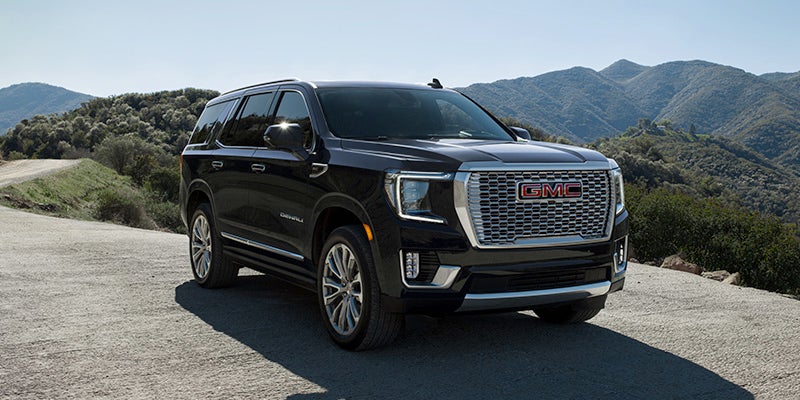
2024 GMC Yukon Overview

The flagship GMC SUV, the GMC Yukon returns largely unchanged for 2024.  The robust V8 power, 3-rows of available seating, and ample towing capacity make the GMC Yukon a favorite among large SUV owners.  Let's take a closer look at what the 024 GMC Yukon has to offer. View GMC Yukon 2024 GMC YUKON: TRIM OPTIONS 2024 GMC Yukon A full-sized three row SUV that can sit up to eight passengers, the GMC Yukon comes in five available trim levels including SLE, SLT, AT4, Denali, and Denali Ultimate.  GMC also offers a 5.3L and a 6.2L V8 engine along with the 3.0L Duramax Turbo Diesel for the Yukon.  Each engine is paired with a 10-speed automatic transmission.  Standard equipment highlights for each trim level follow below: SLE: Starting at an MSRP of $60,195, the SLE is the entry level trim and most affordable option for the GMC Yukon. It comes well equipped with features such as the 10.2-inch diagonal GMC premium infotainment system, LED Headlights, Forward Collision Warning, and Lane Departure mitigation.  The SLE also has the GMC Pro Safety Plus Pkg. available SLT: If you're looking for a little more luxury, the SLT trim might be right for you. It starts at an MSRP of $66,895 and comes standard with features like leather seating surfaces, heated and ventilated front seats, a hands-free power liftgate, and 20-inch wheels along with the GMC Pro Safety Plus Pkg.  There is also available Premium and luxury Packages. AT4: The AT4 trim is the off-road focused option, starting at an MSRP of $76,120 and only available in 4WD. It comes standard with features heated outboard second-row seats, Power-folding third-row seats, skid plates, tow hooks, all-terrain tires, and Magnetic Ride Control that automatically adjusts the shock dampers. Denali: Upscale design identifies the Yukon Denali. It starts at an MSRP of $76,800 and comes standard with features such as power extendable side steps, perforated leather seating surfaces, a panoramic sunroof, and a 14-speaker Bose audio system. Denali Ultimate: The Yukon Denali Ultimate is the most luxurious version of this SUV and comes standard with 4WD along with all of the features of the aforementioned Denali trim, plus additional luxuries like Super Cruise, an 18-speaker Bose Performance audio system, and 22-inch alloy wheels. Its official starting price is a MSRP of $98,550. For a more complete trim level options visit our 2024 GMC Yukon configuration page. 2024 GMC YUKON: PERFORMANCE Similar to the last-generation Yukon, two V-8 engines are offered: a 355-hp 5.3-liter and a 420-hp 6.2-liter. In addition to those gas engines, GMC also offers a 3.0-liter turbo-diesel inline-six that makes a whopping 460 pound-feet of torque and is the choice for buyers who intend to tow heavy items. All models come with a 10-speed automatic transmission operated by buttons on the dashboard and offer either rear- or all-wheel drive. An off-road-oriented AT4 model is also available and features a two-speed transfer case, 20-inch wheels with all-terrain tires, underbody skid plates, and an optional air suspension capable of offering up to two more inches of ground clearance. The GMC Yukon's maximum towing capacity is 8400 pounds, but that requires a rear-wheel-drive model with the 5.3-liter V-8. The 6.2-liter Yukon's maximum trailer rating is 8300 pounds, with the Duramax diesel not far behind at 8200 pounds. Adding four-wheel drive drops these ratings by 200 pounds across the board. 2024 GMC YUKON: INTERIOR DESIGN AND TECHNOLOGY Available in a variety of flavors—from base SLE spec to luxurious Denali Ultimate—the Yukon and long-wheelbase Yukon XL promise seating for up to eight passengers, although ordering the popular second-row captain's chairs will lower the total seating capacity to seven. Denali models offer a unique interior design with a wood-trimmed dashboard and hand-stitched leather upholstery. A novel power-sliding center console is available in SLT and AT4 models (it's standard on the Denali) and allows the driver to motor the center console back and forth over a 10-inch track to make room for bulkier first-row cargo such as a purse or backpack and stash other smaller items out of sight in hidden cubbies. Cargo capacity is generous, especially in the larger XL model, which offers a whopping 145 cubic feet of maximum cargo space with all of its seats stowed. That's more than its cross-town rival, the Ford Expedition Max (which has 122 cubic feet behind its front row of seats). The standard-length Yukon provided enough space for six carry-on cases behind its third-row seats. With the third and second rows stowed, we fit 35. 2024 GMC YUKON: SAFETY AND DRIVER-ASSISTIVE FEATURES A host of driver-assistance features are offered, but GMC only offers basic tech as standard, forcing buyers to pay extra for more advanced ones. For more information about the Yukon's crash-test results, visit the National Highway Traffic Safety Administration ( NHTSA) and Insurance Institute for Highway Safety ( IIHS) websites. Key safety features include: Standard automated emergency braking with forward-collision warning Available lane-departure warning and lane-keeping assist Available adaptive cruise control with hands-free driving mode The Yukon is a great choice whether you're looking for a daily driver or a weekend getaway vehicle. Seminole Chevrolet GMC is your one-stop shop for all things GMC, and we're here to help you find the perfect Yukon for your needs. Our extensive inventory of new and pre-owned GMC vehicles, knowledgeable staff, and commitment to customer service set us apart from the competition. Contact us or visit us today to experience the Seminole Chevrolet Buick GMC difference.

Contact Us

Fill out this form below and we'll contact you shortly
*Required Fields