




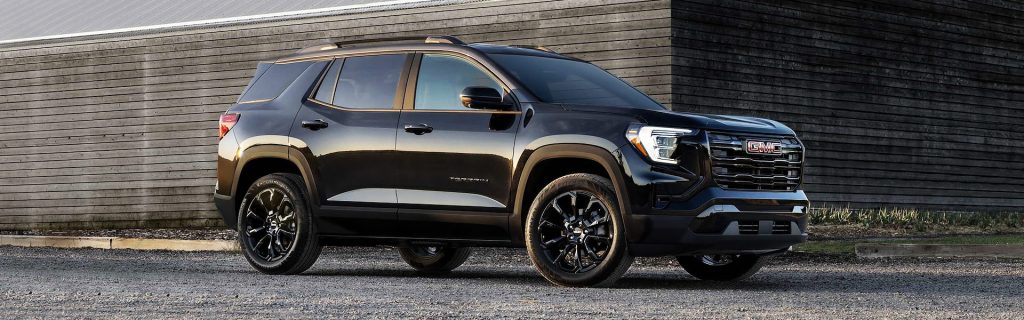
The GMC Terrain is considered a leader in the compact SUV market thanks to its innovative features, impressive power for its class, and incredible dependability. That’s why the redesigned 2025 GMC Terrain has become an exciting fixture in the GMC lineup this year.
Read the rest of this entry »
The 2025 Chevrolet Silverado 1500 stands as a paragon of strength and capability, setting new benchmarks in the pickup truck segment. At Seminole Chevrolet GMC in Seminole, OK, we’re proud to showcase this exceptional vehicle, designed to meet the diverse needs of our community.
Read the rest of this entry »9 Impressive Features of the 2025 Chevrolet Tahoe

The 2025 Chevrolet Tahoe has everything you’re looking for in the perfect family vehicle. From the high-powered engine to the cutting-edge safety features, explore nine features of the new Chevy Tahoe.
6 Innovative Features of the 2025 GMC Sierra EV
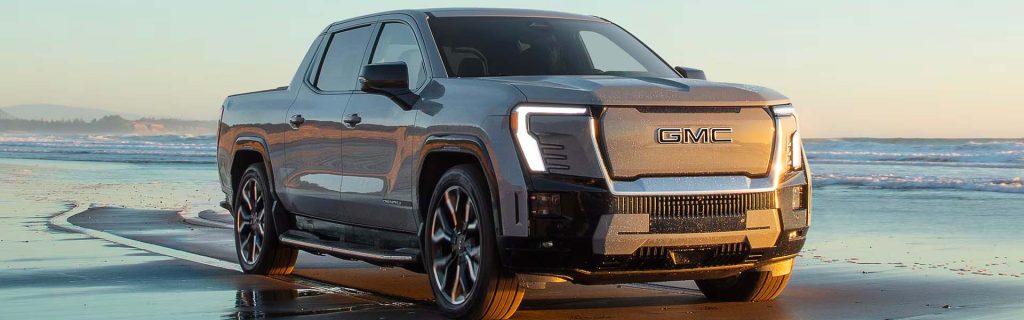
The all-new 2025 GMC Sierra EV offers fast charging, a range of over 400 miles and more than 700 hp to ensure you can tow for hours before you need another charge. Continue reading to learn our five favorite features of the new Sierra EV Denali.
Read the rest of this entry »Friday, 16 August, 2024

Understanding the Difference Between FWD, AWD, RWD, and 4×4 in Your New Chevy
When shopping for a new Chevy, understanding the differences between various drivetrain options can help you choose the perfect vehicle for your needs. Whether you’re considering a family SUV, a powerful truck, or a sporty sedan, knowing whether to go with Front-Wheel Drive (FWD), All-Wheel Drive (AWD), Rear-Wheel Drive (RWD), or 4×4 can make all the difference in your driving experience.
Front-Wheel Drive (FWD)
Front-Wheel Drive is one of the most common drivetrain configurations, particularly in sedans, crossovers, and some SUVs. In a FWD vehicle, the engine’s power is directed to the front wheels. This setup offers several advantages:
- Efficiency: FWD vehicles tend to be more fuel-efficient, as they are typically lighter and have fewer mechanical components than other drivetrains.
- Traction: FWD provides better traction when driving on wet or slippery roads because the weight of the engine sits over the front wheels, improving grip.
- Cost-Effective: Vehicles with FWD are generally less expensive to manufacture, which often translates to a lower purchase price.
However, FWD may not perform as well in off-road conditions or under heavy loads, making it more suitable for daily commuting and light-duty use.
All-Wheel Drive (AWD)
All-Wheel Drive is a versatile option that provides power to all four wheels, either full-time or on-demand. This system is popular in a wide range of vehicles, from compact SUVs to performance cars. Key benefits include:
- Enhanced Traction: AWD improves traction on various surfaces, including wet, icy, or unpaved roads, making it a great choice for drivers who encounter diverse driving conditions.
- Balanced Handling: AWD offers balanced handling and stability, which is especially beneficial in adverse weather conditions or when navigating winding roads.
- Convenience: Modern AWD systems automatically adjust the distribution of power between the front and rear wheels, so drivers don’t need to engage or disengage the system manually.
While AWD improves safety and handling, it usually comes at a higher cost and may slightly reduce fuel efficiency compared to FWD.
Rear-Wheel Drive (RWD)
Rear-Wheel Drive is traditionally found in sports cars, trucks, and larger SUVs. In a RWD vehicle, the engine sends power to the rear wheels, providing a distinct driving experience:
- Performance: RWD is favored for its superior handling and acceleration, especially in performance-oriented vehicles. It offers a more dynamic driving experience, with better balance and weight distribution.
- Towing and Hauling: RWD is ideal for vehicles that need to tow or carry heavy loads, as it provides better traction under heavy loads compared to FWD.
- Durability: RWD systems are generally more robust, making them well-suited for work trucks and vehicles that endure rough driving conditions.
However, RWD may not perform as well in slippery or icy conditions, making it less ideal for regions with harsh winters.
4×4 (Four-Wheel Drive)
Four-Wheel Drive, commonly referred to as 4×4, is specifically designed for off-road driving and heavy-duty use. Unlike AWD, which is generally automatic, 4×4 systems often require the driver to engage the system manually:
- Off-Road Capability: 4×4 systems are engineered for rugged terrain, offering superior traction in mud, snow, sand, and rocky landscapes.
- Heavy-Duty Performance: If you need to tow a heavy trailer, haul equipment, or venture into off-road environments, 4×4 is the best option.
- Control: Many 4×4 vehicles allow drivers to choose between different modes, such as 2WD, 4WD High, and 4WD Low, giving you more control based on the driving conditions.
The trade-off for these benefits is that 4×4 vehicles can be heavier, less fuel-efficient, and more expensive than their AWD or FWD counterparts.
Which Drivetrain is Right for You?
Choosing between FWD, AWD, RWD, and 4×4 depends on your driving needs, environment, and preferences. For daily commuting and cost-effective ownership, FWD may be your best bet. If you often face varying road conditions, AWD provides a balanced solution. RWD is the go-to for performance enthusiasts and those needing to tow or haul. For the ultimate off-road and heavy-duty capability, 4×4 is the clear winner.
At our Chevy dealership, we offer a wide range of vehicles with each of these drivetrains. Visit us today to explore our inventory and find the perfect Chevy to match your lifestyle!
2023 Chevrolet Silverado 3500 HD Towing Capacity
Chevrolet trucks are quickly becoming popular for their prolonged durability, high reliability, and proven performance. Among the outstanding pickup trucks is the new 2023 Chevrolet Silverado 3500 HD which has earned a place among the heavy-duty trucks due to its impressive towing capability.
If you’re looking for the maximum towing capacity for your everyday workload, you’ll likely be impressed by what the 2023 Chevrolet Silverado 3500 HD has to offer. So, what exactly should you expect from the Chevrolet Silverado 3500 HD?
If adequately equipped, the Duramax unit can haul more than rivals claim to tow. It can easily tow your biggest toys or cargo for your next adventure. Whether you need a truck for work or play in Seminole, Oklahoma, you can check it out in our inventory at Seminole Chevrolet GMC. We have plenty of choices to meet your needs, so let’s discuss the Chevrolet Silverado 3500 HD towing capacity in detail.
WHAT IS THE 2023 CHEVROLET SILVERADO 3500 HD TOWING CAPACITY?

2023 Chevrolet Silverado 3500 HD
Heavy-duty trucks get rated based on their maximum towing and payload ratings, even if users do not always test those massive loads. When properly equipped, the Turbo-Diesel Chevrolet Silverado 3500 HD has a towing capacity of 36,000 pounds. The gas-powered Chevrolet Silverado 3500 HD can tow up to 17,400 pounds.
HOW TO REACH THE MAXIMUM CHEVROLET SILVERADO TOWING CAPACITY
If you’re purchasing the Chevrolet Silverado 3500 HD for its towing capabilities, you may want to learn more about its abilities to ensure it can handle the load you want to carry. Remember exceeding what your vehicle is designed to tow can strain your transmission and engine, damage your tires, accelerate brake wear, and even warp your chassis. Eventually, this could turn out to be catastrophic and lead to severe bodily injury and property damage.
That’s why experts add that a truck can achieve a specific towing capacity only when they’re adequately equipped. To be properly equipped means you must equip the vehicle with the right tools and components to operate at its best. For the 2023 Chevrolet Silverado 3500 HD, the 6.6-liter Duramax Turbo-Diesel delivers 450 horsepower and a remarkable 910 pound-feet of torque. That’s enough capability to carry heavy equipment to your job site without issues.
CHEVROLET SILVERADO 3500 HD TOWING AND TRAILERING PACKAGES
The iconic Chevrolet Silverado 3500 HD comes with three trailering packages to increase capability, confidence, and convenience. Available across all trim levels, the basic trailering package adds all the essential towing features, such as the trailer hitch, hitch guidance, and electrical harness.
The Max trailering package adds several other handy features, such as suspension upgrades, automatic locking rear differential, trailer brake controller, and enhanced radiator cooling. The advanced trailering package offers the ideal towing equipment, such as the tire pressure and temperature monitoring system, hitch guidance with hitch view, and advanced trailering system (in-vehicle).
GENERAL TIPS FOR IMPROVING YOUR CHEVROLET SILVERADO 3500 HD’S TOWING CAPACITY
Follow these tips to improve your Chevrolet Silverado’s towing capacity:
INCREASE YOUR SUSPENSION
While it’s likely to be expensive, upgrading your suspension is one of the best ways to increase your Silverado 3500 HD’s towing capacity. A larger suspension reduces the strain on the gross vehicle weight rating (GVWR) and eases the pressure you put on the vehicle. The increased suspension improves how your vehicle handles and destabilizes the load by reducing the extent to which the pickup sways side to side.
UPGRADE THE AXLES
You can carry heavy-duty components with greater ease when you upgrade your axles. The upgraded axle also features an enhanced gear ratio that allows you to tow heavy loads. Again, this is also an expensive upgrade and must be handled by an experienced Chevrolet Silverado service provider. You should also think critically about whether it’s worth upgrading your axles to increase towing capacity.
UPGRADE THE BRAKES
When you start altering your vehicle to handle larger loads, you should also consider how these changes may affect other parts of your truck. If loads are too heavy, your brakes will have to work harder to slow down the vehicle. When you upgrade your rotors and brake pads, you’re preparing your truck for effective management of stress and friction that comes from additional weight.
INSTALL AN UP-TASK HITCH
Be sure to install an up-task hitch when preparing your truck for higher towing capacity. A class IV hitch can handle up to 10,000 pounds, while a class III can handle about 5,000 pounds. Attach your hitch receiver to the vehicle chassis, which is a part of the truck that can handle the weight.
REPLACE YOUR INTAKE AND EXHAUST
Another upgrade you can do to improve your Chevrolet Silverado 3500 HD’s towing capacity is replacing the intake and exhaust. These parts help your truck breathe easily. When you replace them, you get better performance overall and greater torque when hauling a heavy load.
HOW TO TEST THE TOWING CAPACITY IN YOUR CHEVROLET SILVERADO 3500 HD
- Before you start, ensure all numbers you use have the same weight units. For instance, don’t mix kilograms with pounds.
- Load your vehicle with the correct number of passengers and all the cargo you want to transport in your towing vehicle, particularly heavy items such as generators.
- Take the vehicle to a CAT Scale or truck stop and weigh your vehicle to get the scale weight. Save this figure. You can check the GVWR label.
- GVWR doesn’t represent the vehicle’s actual weight with passengers, driver, and cargo inside. Subtract the scale weight from the GVWR to get the actual towing capacity for your Chevrolet Silverado 3500 HD.
START TOWING WITH THE CHEVROLET SILVERADO 3500 HD TODAY
Now that you know how capable, reliable, and powerful the Chevrolet Silverado 3500 HD is, why not start your purchase process now? Our sales representatives at Seminole Chevy GMC have a large inventory of new Chevrolet Silverados and other Chevy models available in new or used condition. We encourage you to stop by for a test drive and start the process of satisfying your towing needs.
When shopping for a new Chevy, understanding the differences between various drivetrain options can help you choose the perfect vehicle for your needs. Whether you’re considering a family SUV, a powerful truck, or a sporty sedan, knowing whether to go with Front-Wheel Drive (FWD), All-Wheel Drive (AWD), Rear-Wheel Drive (RWD), or 4×4 can make all the difference in your driving experience.

Front-Wheel Drive (FWD)
Front-Wheel Drive is one of the most common drivetrain configurations, particularly in sedans, crossovers, and some SUVs. In a FWD vehicle, the engine’s power is directed to the front wheels. This setup offers several advantages:
- Efficiency: FWD vehicles tend to be more fuel-efficient, as they are typically lighter and have fewer mechanical components than other drivetrains.
- Traction: FWD provides better traction when driving on wet or slippery roads because the weight of the engine sits over the front wheels, improving grip.
- Cost-Effective: Vehicles with FWD are generally less expensive to manufacture, which often translates to a lower purchase price.
However, FWD may not perform as well in off-road conditions or under heavy loads, making it more suitable for daily commuting and light-duty use.
All-Wheel Drive (AWD)
All-Wheel Drive is a versatile option that provides power to all four wheels, either full-time or on-demand. This system is popular in a wide range of vehicles, from compact SUVs to performance cars. Key benefits include:
- Enhanced Traction: AWD improves traction on various surfaces, including wet, icy, or unpaved roads, making it a great choice for drivers who encounter diverse driving conditions.
- Balanced Handling: AWD offers balanced handling and stability, which is especially beneficial in adverse weather conditions or when navigating winding roads.
- Convenience: Modern AWD systems automatically adjust the distribution of power between the front and rear wheels, so drivers don’t need to engage or disengage the system manually.
While AWD improves safety and handling, it usually comes at a higher cost and may slightly reduce fuel efficiency compared to FWD.
Rear-Wheel Drive (RWD)
Rear-Wheel Drive is traditionally found in sports cars, trucks, and larger SUVs. In a RWD vehicle, the engine sends power to the rear wheels, providing a distinct driving experience:
- Performance: RWD is favored for its superior handling and acceleration, especially in performance-oriented vehicles. It offers a more dynamic driving experience, with better balance and weight distribution.
- Towing and Hauling: RWD is ideal for vehicles that need to tow or carry heavy loads, as it provides better traction under heavy loads compared to FWD.
- Durability: RWD systems are generally more robust, making them well-suited for work trucks and vehicles that endure rough driving conditions.
However, RWD may not perform as well in slippery or icy conditions, making it less ideal for regions with harsh winters.
4×4 (Four-Wheel Drive)
Four-Wheel Drive, commonly referred to as 4×4, is specifically designed for off-road driving and heavy-duty use. Unlike AWD, which is generally automatic, 4×4 systems often require the driver to engage the system manually:
- Off-Road Capability: 4×4 systems are engineered for rugged terrain, offering superior traction in mud, snow, sand, and rocky landscapes.
- Heavy-Duty Performance: If you need to tow a heavy trailer, haul equipment, or venture into off-road environments, 4×4 is the best option.
- Control: Many 4×4 vehicles allow drivers to choose between different modes, such as 2WD, 4WD High, and 4WD Low, giving you more control based on the driving conditions.
The trade-off for these benefits is that 4×4 vehicles can be heavier, less fuel-efficient, and more expensive than their AWD or FWD counterparts.
Which Drivetrain is Right for You?
Choosing between FWD, AWD, RWD, and 4×4 depends on your driving needs, environment, and preferences. For daily commuting and cost-effective ownership, FWD may be your best bet. If you often face varying road conditions, AWD provides a balanced solution. RWD is the go-to for performance enthusiasts and those needing to tow or haul. For the ultimate off-road and heavy-duty capability, 4×4 is the clear winner.
At our Chevy dealership, we offer a wide range of vehicles with each of these drivetrains. Visit us today to explore our inventory and find the perfect Chevy to match your lifestyle!
How Do I Know How Much My Truck Can Tow

How Much Can a Truck Tow?
When determining how much your truck can tow and how much you are towing, there are many factors you need to consider. Let’s start by just looking at the information you’ll need to know about your truck.
What your truck can tow:
- Manufacturer Specifications: Many manufacturers will place a sticker on the inside of the driver’s doorjamb that will give you GVWR (Gross Vehicle Weight Rating) and GAWR (Gross Axle Weight Rating). You can often also find the information inside the owner’s manual. Many manufacturer’s owner’s manuals will have a chart with different truck configurations to help you determine the correct weight ratings for your truck. If you do not know how the truck is equipped, it will be difficult to determine the correct information though.
- Vehicle Equipment: As seen above, it’s important to know any packages or added equipment your truck may have to determine the correct weight ratings. Some trucks will also come equipped with towing packages that could include features such as upgraded suspension, cooling systems, transmission coolers, or braking enhancers. These features can increase the towing capacity of the truck beyond the base specifications.
- GVWR (Gross Vehicle Weight Rating): GVWR is the maximum allowable weight a vehicle or trailer can hold when loaded with people and/or cargo. You want to ensure that the weight on your truck or trailer does not exceed the GVWR amount for either. You also want to remember that GVWR and towing capacity are not the same thing. GVWR is the total amount of weight put on the truck’s frame, axle, and tires. Towing capacity also takes into consideration the horizontal stress put on a tuck’s frame from the trailer.
- GAWR (Gross Axle Weight Rating): GAWR is the maximum amount of weight a particular axle can support. The front and rear axils generally have different ratings. The tongue weight of a trailer and cargo, or load, weight will be mainly supported by the rear axle.
- Braked and Un-braked Towing Capacity: Some trailers come with a braking system that can be wired to the vehicle. This allows the trailer brakes to be applied at the same time as the truck brakes are when you press the brake pedal. This is important to know because braking is what limits the towing capacity of a truck the most. Trucks can tow more than their towing capacity shows but lack the ability to safely stop. A trailer with brakes can increase towing capacity simply by giving the truck more stopping power.
- Trailer Hitch: Regardless of how big or powerful your truck is, towing will be limited by the hitch you have. Hitches vary by class and go from a Class I to a Class V. A Class I is able to tow up to 2,000 lbs. and a Class V is able to tow up to 20,000 lbs.
So, determining how much weight your truck can tow takes a lot of different information. Not only do you need to know the GVWR and GAWR, but you also need to know the weight limits on the hitch you are using. Once you know all this information, it’s all about the load you are carrying and towing. Next, let’s take a look at calculating the weight you are putting on the truck.
How Much You are Towing
- Payload: Payload contributes to the overall gross vehicle weight of the truck and will affect the truck’s ability to tow. The payload includes all the passengers, fuel in the truck, and cargo that is inside of it.
- Tongue Weight: Tongue weight is the downward force that is placed on the hitch by the trailer and its contents. The payload of the trailer will affect tongue weight, and can be managed by distributing your load in the trailer, to maintain proper towing balance and stability. In general, you can figure the tongue weight at 10% to 15% of the weight of your trailer, but to be certain, you can always go to a scale to get an exact number.
Always remember to take into consideration the weight of passengers and fuel when doing your calculations for the weight being put on your truck.
If you’re looking for a truck to suit your towing needs, give us a call or stop today at Seminole Chevrolet GMC. With our inventory of New and Pre-owned Silverados and Sierras we have the truck to get the job done. Whether your looking for a Light Duty or Heavy Duty Silverado you’ll find it at Seminole Chevrolet GMC, your number one spot for Seminole auto sales.
2024 GMC Pro Safety and Pro Safety Plus Features
GMC Pro Safety is a comprehensive suite of advanced safety features designed to enhance driver confidence and help mitigate potential accidents on the road. While the specific features may vary depending on the model and trim level, they share some common elements of GMC Pro Safety features.

GMC Pro Safety Features:
Forward Collision Alert:
This system uses sensors to detect vehicles ahead and alerts the driver if a potential front-end collision is imminent, allowing for timely intervention.
Automatic Emergency Braking:
In conjunction with Forward Collision Alert, this feature can apply the brakes automatically if the driver does not respond to the impending collision warning, helping to reduce the severity of an impact or avoid it altogether.
Lane Keep Assist with Lane Departure Warning:
This system helps prevent unintentional lane drifting by providing gentle steering inputs to keep the vehicle centered in its lane. It also alerts the driver if the vehicle begins to drift out of its lane without signaling.
Rear Cross Traffic Alert:
When reversing, this feature alerts the driver to approaching traffic from the sides, especially useful when backing out of parking spaces or driveways with limited visibility.
Blind Spot Monitoring:
Using sensors, this system detects vehicles in the driver’s blind spots and provides visual or audible alerts to help avoid potential collisions during lane changes or merging maneuvers.
Adaptive Cruise Control:
This feature maintains a set speed while automatically adjusting the vehicle’s speed to maintain a safe following distance from the vehicle ahead, reducing the need for constant manual adjustments on long highway drives.
Surround Vision:
Utilizing multiple cameras, this feature provides a bird’s-eye view of the vehicle’s surroundings, aiding in parking and maneuvering in tight spaces by offering a comprehensive view of obstacles.
The GMC Pro Safety Plus Package includes additional advanced safety features beyond the standard GMC Pro Safety suite. The specific features included in this package may vary depending on the model and trim level of the GMC vehicle.
GMC Pro Safety Plus Features:
Enhanced Automatic Emergency Braking:
This feature may offer additional functionality, such as pedestrian detection, to further improve collision avoidance capabilities.
Rear Camera Mirror:
This advanced rear view mirror utilizes a camera to provide a wider, unobstructed view of the area behind the vehicle, enhancing visibility and reducing blind spots.
Head-Up Display:
This feature projects key information, such as vehicle speed, navigation instructions, and safety alerts, onto the windshield within the driver’s line of sight, minimizing distractions and keeping the driver informed without taking their eyes off the road.
Enhanced Surround Vision:
Building upon the standard Surround Vision feature, Enhanced Surround Vision provides even more comprehensive coverage of the vehicle’s surroundings through additional camera angles, aiding in parking and maneuvering in tight spaces.
Adaptive Cruise Control – Advanced:
This advanced version of adaptive cruise control may offer additional functionality, such as stop-and-go capability, allowing the vehicle to automatically come to a complete stop in traffic and resume driving when conditions permit.
Lane Change Alert with Side Blind Zone Alert:
This feature provides additional assistance during lane changes by alerting the driver to vehicles in the adjacent lanes, reducing the risk of collisions during maneuvers.
Whether your looking for a New GMC Vehicles or a Certified Preowned GMC we have the one for you. Visit us or give us a call today at Seminole GMC in Seminole, OK.
2024 Chevrolet Silverado 1500 Max Trailering
2024 Chevrolet Silverado 1500 Max Trailering1
Tow with confidence in a 2024 Chevrolet Silverado 1500. You know what you want to tow and there’s a Silverado for you to get the job done. Let us at Seminole Chevrolet GMC help you find the perfect truck capable of handling all your towing and trailering needs.
| CREW CABS | DOUBLE CAB | REGULAR CABS | |||||||||
| ENGINE | GCWR2 (LBS) | SHORT BED 2WD | STD BED 2WD | SHORT BED 4WD | STD BED 4WD | STD BED 2WD | STD BED 4WD | STD BED 2WD | LONG BED 2WD | STD BED 4WD | LONG BED 4WD |
| 2.7L TURBO | 14,000 | NA | NA | NA | NA | NA | NA | 9,100 | NA | 8,900 | NA |
| 14,500 | 9,200 | 9,100 | 9,000/8,9003 | 9,000 | 9,300 | 9,000 | NA | 9,500 | NA | 9,300 | |
| CREW CABS | DOUBLE CAB | REGULAR CABS | |||||||||
| ENGINE | GCWR (LBS) | SHORT BED 2WD | STD BED 2WD | SHORT BED 4WD | STD BED 4WD | STD BED 2WD | STD BED 4WD | STD BED 2WD | LONG BED 2WD | STD BED 4WD | LONG BED 4WD |
| 5.3L V8 | 15,000 | 9,500 | 9,400 | 9,300/9,2003 | 9,200 | 9,500 | 9,300 | NA | 9,900 | NA | 9,700 |
| 16,8004 | 11,300 | 11,200 | 11,000 | 11,000 | 11,300 | 11,000 | NA | NA | NA | NA | |
| CREW CABS | DOUBLE CAB | ||||||
| ENGINE | GCWR (LBS) | SHORT BED 2WD | STD BED 2WD | SHORT BED 4WD | STD BED 4WD | STD BED 2WD | STD BED 4WD |
| 6.2L V8 | 15,000 | NA | NA | 9,200 | 9,000/ 9,1003 | NA | 9,300 |
| 17,8004 | NA | NA | 11,800 | 11,800 | NA | 12,100 | |
| 19,1005 | NA | NA | 13,100 | 13,100 | NA | 13,300 | |
| CREW CABS | |||||
| ENGINE | GCWR (LBS) | SHORT BED 2WD | STD BED 2WD | SHORT BED 4WD | STD BED 4WD |
| 6.2L V (ZR2) | 15,000 | NA | NA | 8,800 | NA |
| CREW CABS | DOUBLE CAB | ||||||
| ENGINE | GCWR (LBS) | SHORT BED 2WD | STD BED 2WD | SHORT BED 4WD | STD BED 4WD | STD BED 2WD | STD BED 4WD |
| DURAMAX 3.0L I-6 | 15,000 | 9,300 | NA | 9,000 | 9,000 | 9,400 | 9,100 |
| 17,8004 | 12,100 | NA | 11,800 | 11,800 | 12,200 | 11,900 | |
| 19,0006 | 13,300 | NA | 13,000 | 12,900 | 13,300 | 13,100 | |
| CREW CABS | |||||
| ENGINE | GCWR (LBS) | SHORT BED 2WD | STD BED 2WD | SHORT BED 4WD | STD BED 4WD |
| DURAMAX 3.0L I-6 (ZR2) | 15,000 | NA | NA | 8,700 | NA |
1 – Maximum trailering ratings are intended for comparison purposes only. Before you buy a vehicle or use it for trailering, carefully review the trailering section of the Owner’s Manual. The trailering capacity of your specific vehicle may vary. The weight of passengers, cargo, and options or accessories may reduce the amount you can trailer.
2 – When properly equipped: includes weight of the vehicle and trailer combination, including the weight of drive, passengers, fuel, optional equipment, and cargo in the vehicle and trailer.
3 – Requires 18-inch Goodyear Wrangler DuraTrac MT tires or 20-inch Goodyear Wrangler Territory MT tires.
4 – Requires available Max Trailering Package (NHT).
5 – RST with available Max Trailering Package and 20-inch wheels.
6 – Requires available Max Trailering Package and 20-inch wheels.
Connect with us


- December 2025
- June 2025
- May 2025
- April 2025
- March 2025
- February 2025
- December 2024
- August 2024
- May 2024
- April 2024
- March 2024
- January 2024
- December 2023
- April 2023
- March 2023
- February 2023
- January 2023
- December 2022
- November 2022
- October 2022
- September 2022
- August 2022
- July 2022
- April 2022
- March 2022
- February 2022
- January 2022
- December 2021
- November 2021
- October 2021
- September 2021
- August 2021
- July 2021
- June 2021
- May 2021
- April 2021
- March 2021
- January 2021
Archives
- 2024 Chevrolet Silverado
- 2025 Chevrolet Equinox
- 2025 Chevrolet Malibu
- 2025 Chevrolet Silverado 1500
- 2025 Chevrolet Suburban
- 2025 Chevrolet Trax
- 2025 Chevy Blazer
- 2025 Chevy Blazer EV
- 2025 Chevy Colorado
- 2025 Chevy Lineup
- 2025 Chevy Silverado EV
- 2025 Chevy Tahoe
- 2025 GMC Acadia
- 2025 GMC Canyon
- 2025 GMC Lineup
- 2025 GMC Sierra
- Car Tips
- Chevrolet Safety Features
- Chevy EVs
- Chevy Safety Features
- Chevy Sedans
- Chevy SUVs
- Chevy Tahoe
- Chevy Trucks
- Community Events
- Fiinance
- Finance
- GM Certified Pre-owned
- GMC Lineup
- GMC Pro Safety
- GMC Pro Safety Plus
- GMC Safety Features
- GMC Sierra EV
- GMC Terrain
- GMC Trucks
- Local
- New GMC SUV
- New Inventory
- News
- Pre-Owned Inventory
- Seminole Buick Dealer
- Seminole Chevrolet Dealer
- Seminole Chevrolet GMC
- Service
- Sierra Towing
- Sierra Trailering
- Silverado Max Trailering
- Silverado Towing
- Silverado Trailering
- Social
- Trade in Values
- Uncategorized
- Used Car Values
- Used Cars